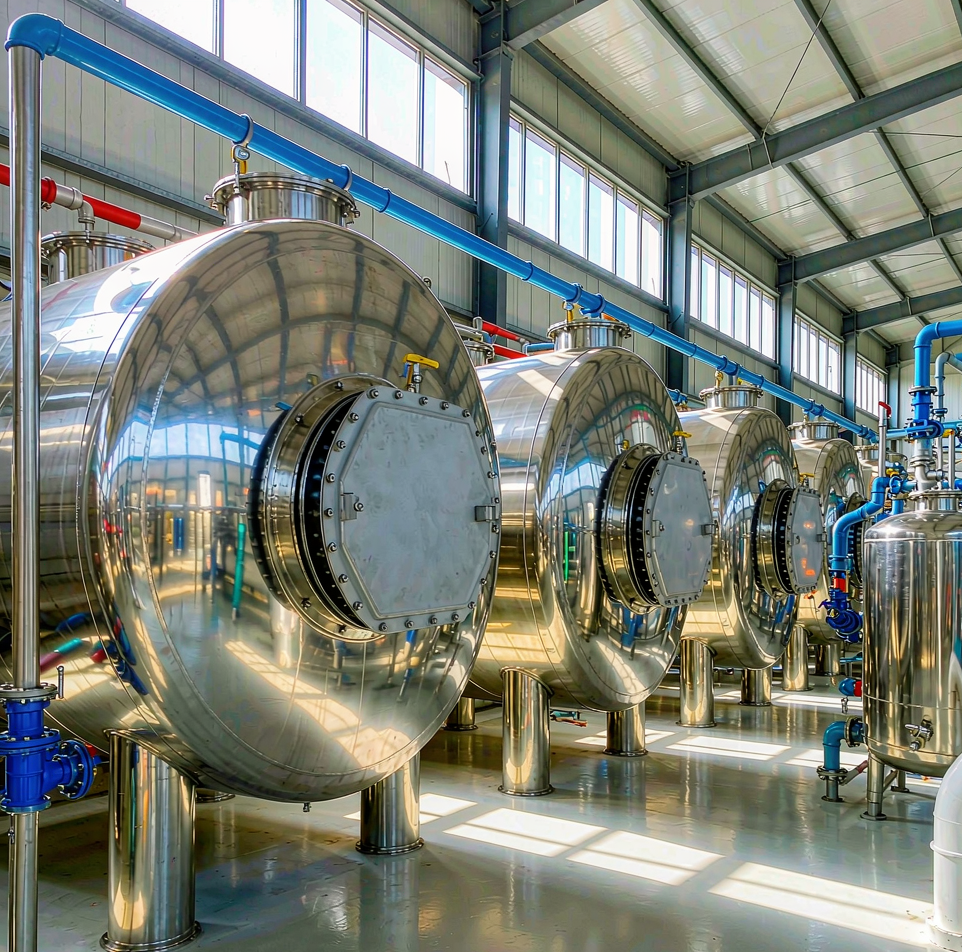
A carbon change-out is the one maintenance event most plants prepare for with a phone call — and it shows. The media arrives before the disposal route is confirmed, the vessel is opened in the rain, twenty tonnes of wet carbon sits on the apron overnight, and the restart slips a week. None of it is carbon engineering; all of it is logistics. Planned properly, a change-out is a 48-hour procedure.
Every change-out has the same four movements, and the sequence is fixed: spent carbon out, vessel inspection, fresh carbon in, wet commissioning. Problems almost always start when the first movement is scheduled before its counterpart — transport booked before the disposal site confirmed, or the delivery timed before the empty vessel is actually empty.
| Movement | Lead time to book | What goes wrong unplanned |
|---|---|---|
| Breakthrough test / date set | Continuous monitoring | Change-out triggered by complaint |
| Disposal route + paperwork | 3–6 weeks | Wet carbon stranded on site |
| Transport (both directions) | 2–3 weeks | Truck arrives before vessel is empty |
| Fresh carbon production | 2–4 weeks (custom mesh 3–5) | Grade substituted to meet the date |
| Vessel prep + inspection | With the swap | Sample points serviced late or never |
| Wet commissioning | 1–2 shifts | Air pockets; weeks of poor performance |
The two ends of the chain deserve most of the planning:
The single best investment in change-out sanity is a two-vessel series train. The lead bed runs to exhaustion while the lag bed polishes; when the lead breaks through, only the lead is swapped — the plant never stops, and the lag bed is demoted to lead duty. Compare that with a single vessel that must be drained, refilled and recommissioned in one continuous operation under production pressure.
Lead-lag also recovers media value: the lead bed is changed at full exhaustion rather than at first breakthrough, typically recovering 30–40% more service life from the same annual media spend. The change-out schedule then follows the breakthrough curve from your column test — a calendar of planned shifts, not a diary of emergencies.
We support change-outs with pre-quoted disposal coordination and loading supervision where distance allows. The media is the easy part; the schedule is where the week gets lost.
Fifteen technical notes · no email gate
Most imported-carbon problems are paperwork problems that surface at the port. The document set, the honest calendar, and the QC that catches issues at the factory.
Iodine number measures micropores below 2 nanometres. It says almost nothing about decolourisation. Here is the number you should ask for instead.
Finer mesh buys kinetics and costs pressure drop. Picking a split from vessel size, backwash rate and allowable head loss — not from habit.
Spent carbon is a resource with a transport cost attached. A break-even calculation for thermal reactivation at different scales and distances.
Contaminant, inlet level, flow rate, target limit — four numbers are enough for a first recommendation and a media volume estimate.